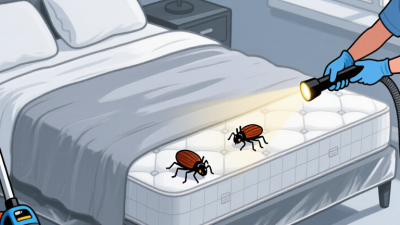
China Best Bed Bug Treatment What Works Best?
Choosing the best bed bug treatment in China starts with confirming the pest and the extent of the infestation. Bed bugs can hide in mattress seams, bed frames, headboards, and narrow wall gaps. A few dark spots or shed skins may be easy to miss. Small signs matter. Misidentification can waste time and lead to unsuitable treatment choices. This guide compares practical options, including inspection, heat, and professionally selected products.
Industry data shows why careful planning matters. The National Pest Management Association’s 2018 Bugs Without Borders survey reported that 97% of responding pest professionals had treated bed bugs during the previous year. It also found that 68% considered bed bugs one of the most difficult pests to control. These figures describe professionals’ reported experience, not treatment success rates. That distinction matters. The survey is also based on U.S. industry responses, so it should not be treated as China-specific evidence.
Effective bed bug treatment often relies on a coordinated plan, rather than one quick fix. The U.S. Environmental Protection Agency recommends an integrated approach that combines inspection, prevention, and appropriate control methods. In practice, this may mean checking mattress seams with a flashlight, reducing clutter, and asking a qualified local provider about monitoring and treatment choices. Product labels and provider credentials deserve attention. No single method guarantees results. Repeated inspections may be needed, and the process can be frustrating. That is an honest limitation, not a reason to rely on unverified promises.
How to Confirm Bed Bugs: Adults Measure 5–7 mm (CDC)
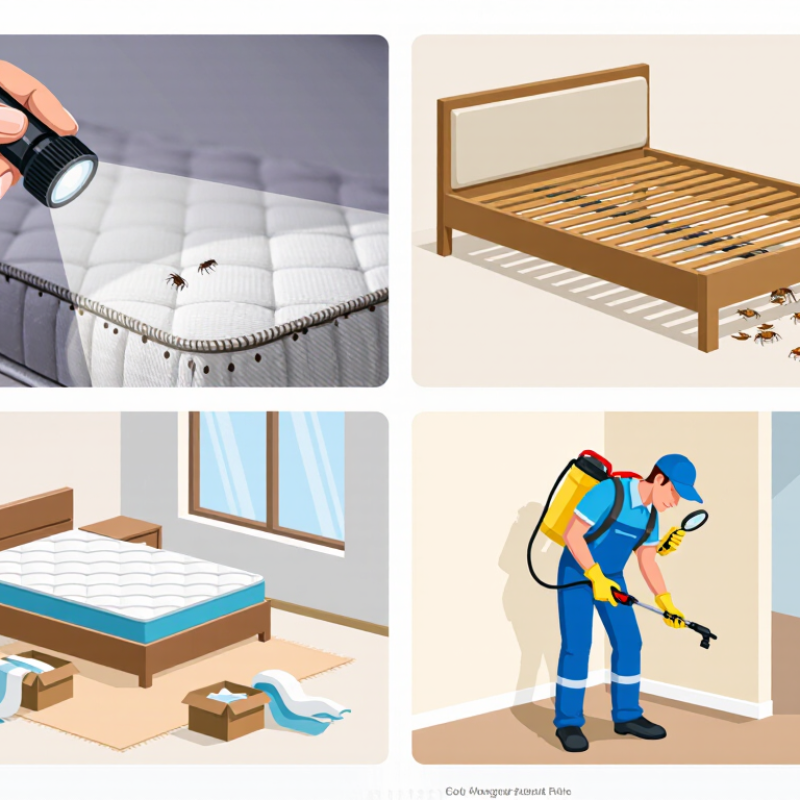
Before choosing a bed bug treatment, confirm what you are seeing. The CDC describes adult bed bugs as about 5–7 mm long, roughly the size of an apple seed. Before feeding, they are flat and oval, usually reddish-brown; after feeding, their bodies may look swollen. Look closely. Check mattress seams, the bed frame, and nearby furniture with a flashlight. Tiny pale eggs and shed skins may be tucked into cracks. A dark speck alone is not proof; dust, ink, and other insects can look similar.
Look for a live insect or several matching clues, such as dark fecal spots and shed skins near sleeping areas. Bites cannot confirm an infestation: skin reactions vary, and marks may appear later. If you are unsure, place a specimen in a sealed container or take a clear close-up photo for a qualified pest professional to identify. Avoid spraying based only on a rash or one mark. Treatment depends on accurate identification and how widely insects are present. One quick fix may not solve it. It is easy to miss a seam, so checking the same spots again is a sensible step.
Where to Inspect: Check Mattress Seams and Nearby Hiding Places
Start with the mattress seams, especially the piping, stitched edges, labels, and folded corners. Use a bright flashlight and move slowly. Look for live insects, tiny dark spotting, pale shed skins, or small whitish eggs attached to fabric. No single mark proves there are bed bugs, so avoid treating a stain as confirmation. Take your time. Lift the mattress carefully and inspect the bed frame, screw holes, slats, and joints. Avoid shaking bedding, which can scatter insects or debris.
Check nearby hiding places too: the headboard, bedside tables, upholstered chairs, and cracks along baseboards. Pay close attention to screw holes and narrow gaps where wood meets fabric. Luggage stored beside the bed deserves a look, including seams and pockets. Bed bugs may hide beyond the mattress, sometimes just a short distance away. This step is easy to rush; a missed seam can mean repeating the inspection. If you find suspicious evidence, photograph its location and consider asking a qualified pest professional to identify it before choosing a treatment.
Which Treatments Work: Compare Heat, Steam, and Registered Insecticides
Heat, steam, and registered insecticides solve different parts of a bed bug problem. Whole-room heat can reach hiding places in furniture and wall gaps, but temperatures must stay lethal long enough. In a 2011 Journal of Economic Entomology study, Kells and Goblirsch found that eggs were more heat tolerant than mobile bed bugs; at 45°C, complete egg mortality could require up to 71.5 minutes. A brief warm-up is not enough. Poorly monitored heat may leave cool pockets behind a dresser or inside a mattress seam.
Steam is more targeted. The US Environmental Protection Agency advises using steam at least 130°F, with gentle airflow, to avoid scattering bugs. Move slowly over mattress seams, bed frames, and upholstery; steam cannot treat every concealed crack. Registered insecticides can help when selected for the surface and applied exactly as the label directs. Some bed bug populations resist commonly used insecticide groups, so a spray alone may fail. A practical treatment plan combines inspection, physical methods, and suitable registered products, followed by repeat checks. It is tempting to expect one pass to work. That expectation deserves a second look.
China Best Bed Bug Treatment What Works Best? - Which Treatments Work: Compare Heat, Steam, and Registered Insecticides
| Treatment | How It Works | What It Can Treat | Strengths | Limitations and Safety | Best Use |
|---|---|---|---|---|---|
| Professional whole-room heat | Raises the temperature of the treated space and its contents to levels that kill bed bugs when the required temperature is reached and held throughout the treatment area. | Bed bugs and eggs in accessible locations within the heated area. | Can treat many hiding places at once and does not depend on the insects contacting a pesticide residue. | Cold spots or items that do not reach the target temperature may allow bed bugs to survive. Heat can damage heat-sensitive belongings; preparation and temperature monitoring by trained professionals are important. It leaves no lasting residual protection. | A significant infestation where a qualified pest-management professional can treat and monitor the entire space. |
| Steam | Delivers high-temperature steam directly to bed bugs and eggs on suitable surfaces. The treated surface must receive enough heat; EPA guidance advises a steam temperature of at least 130°F (54°C) at the nozzle. | Exposed seams, tufts, folds, cracks, and other reachable areas on mattresses, furniture, and similar items. | Can kill bed bugs and eggs on contact without applying insecticide to the treated surface. | Works only where the heat reaches; it does not provide residual control. Steam can injure the operator, add moisture, and damage heat- or moisture-sensitive materials. Use a suitable steamer and avoid forceful airflow that could scatter bugs. | Targeted treatment of reachable hiding places, often as one part of a broader control plan. |
| Registered insecticides | Products labeled for bed bugs kill through contact, residual exposure, or other labeled modes of action. Results depend on the product, correct placement, and bed bug susceptibility. | Only the sites and surfaces permitted by the product label; some products are intended for cracks and crevices rather than bedding or other exposed surfaces. | Some products provide residual activity in treated locations and can complement nonchemical methods in an integrated plan. | Resistance can reduce the effectiveness of some insecticides, and eggs may be less susceptible to certain products. Incorrect use can create health risks. Use only products currently registered and labeled for bed bugs and the intended use in China; follow all label directions. Never apply a product to people or pets. | Carefully targeted use, preferably selected and applied by a qualified professional as part of integrated pest management. |
| Integrated pest management (IPM) | Combines inspection and monitoring with laundering or heat-drying suitable items, vacuuming, encasements, clutter reduction, sealing appropriate gaps, and carefully selected heat, steam, or labeled insecticide treatments. | Infestations across a room or home, with methods matched to identified hiding places and the extent of activity. | Addresses multiple life stages and hiding places, helps track results, and reduces reliance on any single treatment method. | Requires careful inspection, follow-up monitoring, and consistent preparation. A single treatment may not resolve an infestation; repeat visits or additional measures may be needed. | The most practical overall approach for most infestations, especially when guided by a qualified pest-management professional. |
Practical takeaway: No single method is best for every situation. Thorough inspection, correct application, and follow-up monitoring are essential. Check current Chinese registration and label instructions before using any insecticide.
How to Treat Washable Items: Use a High-Heat Dryer for 30 Minutes (UC IPM)
China Best Bed Bug Treatment What Works Best?
For washable items, a high-heat dryer can be a practical part of bed bug treatment. UC IPM advises drying items on high heat for 30 minutes. Heat, rather than washing alone, is the key step. Check each care label first; some fabrics can shrink, melt, or lose their shape. A damaged sweater is not a useful trade-off.
Place items in the dryer without packing it tightly, so warm air can move between them. Use a timer. If the load is large or still damp, drying may take longer, and I would not assume every item received equal heat. When the cycle ends, move treated clothes straight into a clean bag or lidded container. Keep them apart from untreated laundry and bedding. This small detail is easy to overlook. It matters. A dryer can treat suitable washable belongings, but it does not reach bed bugs hiding in a mattress seam, bed frame, or room clutter. Check those places separately, and repeat careful handling rather than carrying loose laundry through the home.
China Best Bed Bug Treatment: What Works Best?
Recommended treatment time for washable items
For washable items, use a high-heat dryer for 30 minutes. This chart shows the recommended dryer time; it does not compare treatment effectiveness.
How to Check for Remaining Bugs: Reinspect Every 7 Days (U.S. EPA)
After bed bug treatment, a single clean inspection does not prove the problem is gone. Check every seven days, as U.S. EPA guidance advises, and keep monitoring for several weeks. Young bugs may emerge after an earlier visit. Annoying, but important.
Use a flashlight to examine mattress seams, bed-frame joints, screw holes, and the headboard. Look for live bugs, pale shed skins, tiny eggs, or dark spotting. Check nearby furniture and baseboards too, especially close to the bed. A thin card can help reveal insects hiding in narrow cracks. Move slowly. Rushing makes small signs easy to miss.
Write down the date and what you found, even if the note says “nothing.” Photos can help you compare changes between inspections. Avoid carrying bedding or furniture into another room, since that may spread insects. If you find fresh signs, or are unsure what you saw, contact a qualified pest professional and follow the treatment label’s instructions. A missed seam can happen; repeat checks give you another chance to catch activity.
Related Posts
-
How to Choose the Most Effective Bed Bug Treatment in 2026
-
2026 Top Bed Bugs Removal Solutions for Global Buyers?
-
10 Bed Bug Pest Control Tips for Global Buyers
-
What Is Bed Bug Treatment and How Does It Work?
-
Top 10 Best Bed Bug Treatment Products?
-

2026 How to Choose the Best Bed Bug Treatment for Your Home?