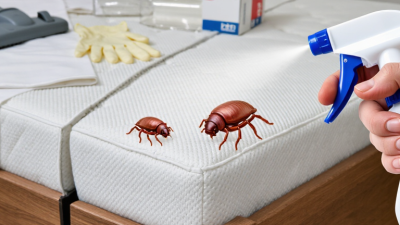
China Top Bed Bug Killer Spray Manufacturers?
Choosing among China’s top bed bug killer spray manufacturers requires more than comparing factory photos or attractive price lists. This market includes experienced exporters, specialized formulators, and smaller suppliers with limited documentation. A reliable review should examine product performance, manufacturing capacity, ingredient transparency, and compliance records. It should also consider whether the supplier provides safety data sheets, batch information, laboratory reports, and clear application instructions.
In practical terms, buyers need evidence they can verify. Ask how the formula performs on mattresses, bed frames, cracks, and other common hiding areas. Check whether the manufacturer follows documented quality procedures and supports consistent production between batches. Factory audits, sample testing, and traceable packaging can reveal details that online listings often miss. Some manufacturers offer OEM services, but customization should never weaken safety information or labeling accuracy.
A polished catalogue is not proof.
Supplier claims may sound convincing, yet independent testing can expose gaps in residual effectiveness or spray consistency. This is where careful judgment matters. No single manufacturer fits every purchasing goal, because hospitality, retail, and household users may require different packaging and support. The strongest candidates combine formulation knowledge, transparent communication, dependable logistics, and a willingness to discuss limitations. This introduction will explore practical selection criteria, verification steps, and notable Chinese manufacturers without treating “top” as an automatic guarantee. Readers should remain critical, since product quality can change over time and regional requirements may differ.

What Makes China a Leading Bed Bug Killer Spray Manufacturer?
China has become a leading bed bug killer spray manufacturing hub through a dense, practical supply chain. Chemical suppliers, bottle producers, filling plants, and packaging companies often operate within reachable distances. This shortens production schedules and reduces transport costs. It also supports faster adjustments to bottle size, spray patterns, and carton design.
Manufacturers with experienced formulators study bed bug behavior, surface coverage, drying time, and user safety. Their teams can develop water-based or low-odor formulas for homes, hotels, and property maintenance. Reliable facilities usually keep batch records, inspect incoming materials, and test spray output during production. Independent laboratory testing can also verify stability and insect control claims. Small details matter, such as a nozzle that does not clog after repeated use.
Flexible production is another advantage. Buyers can request different pack sizes, languages, and shipping configurations without rebuilding the whole supply chain. Many factories also prepare safety documents and product information for specific export markets. However, lower pricing should never be treated as proof of quality. A rushed factory may use inconsistent materials or make claims without sufficient testing. That risk deserves careful review. Factory visits, sample trials, documentation checks, and clear performance requirements help buyers make better decisions. China’s strength is real, but it depends on professional management, not location alone.
Why China Is a Leading Bed Bug Killer Spray Manufacturing Base
China’s large manufacturing ecosystem supports bed bug killer spray production through extensive chemical processing, packaging, component sourcing, and export infrastructure. The chart shows China’s share of global manufacturing value added in selected years, based on publicly reported UNIDO manufacturing statistics.
Indicator: China’s share of global manufacturing value added. Values are rounded estimates based on UNIDO national manufacturing statistics and international manufacturing-value-added comparisons.
Key Types of Bed Bug Killer Sprays Made in China
China’s bed bug killer spray manufacturers produce several formulation types for professional and household use. Water-based residual sprays are common. They leave an active layer on bed frames, floor cracks, and skirting boards. Aerosol sprays deliver quick contact treatment. However, they often provide limited residual protection.
Desiccant-based liquid sprays use mineral particles to damage a bed bug’s protective coating. They can support resistance-management programs when applied to dry, hidden surfaces. Some factories also make botanical sprays with plant-derived oils. Their odor may be milder, but performance can vary sharply by formula and infestation level.
Not every spray works. Testing matters.
The 2018 NPMA Bugs Without Borders survey reported that 97% of pest professionals had treated bed bugs during the previous year. This figure shows why manufacturers should provide clear efficacy data, surface instructions, and safety documentation. The U.S. Environmental Protection Agency recommends integrated pest management, rather than relying on one chemical method. Chinese suppliers commonly offer ready-to-use sprays, concentrates, and refill formats, but buyers should verify local registration requirements before import or sale. Independent laboratory testing should measure knockdown speed, residual activity, and performance against resistant populations. One weakness remains: marketing claims may sound stronger than field results. Experienced buyers should request batch records, active-ingredient concentration, stability data, and application limits.
How Chinese Manufacturers Develop and Test Bed Bug Sprays
China’s bed bug spray manufacturers usually begin with local resistance data, not a ready-made formula. They screen active ingredients against bed bugs collected from hotels, apartments, and transport facilities. China’s pesticide efficacy standards require controlled tests, while serious producers add independent laboratory trials. Small details matter: room temperature, fabric type, spray distance, and insect age can change results.
The 2023 Bugs Without Borders survey reported that 91% of pest professionals encountered bed bugs in homes, while 68% treated hotels. This demand pushes manufacturers to test both quick knockdown and residual performance. Test rooms may include mattresses, wooden joints, luggage seams, and dark floor gaps. Technicians record mortality at 24, 48, and 72 hours. EPA pesticide performance guidance also stresses realistic application methods and repeatable controls.
Laboratory success can mislead. Field populations may tolerate common chemical groups, especially after repeated exposure. Some Chinese manufacturers therefore compare several formulations and test treated surfaces after cleaning or abrasion. Independent laboratories can verify concentration, stability, and spray consistency. Yet a perfect chamber result is not a guarantee. Poor ventilation, uneven coverage, or hidden eggs may reduce performance. One practical weakness remains: many trials use clean surfaces, unlike real rooms filled with dust and clutter. Manufacturers should report these limitations clearly, even when the results look less impressive.
Safety Standards and Certifications for Bed Bug Killer Sprays
When evaluating China-based bed bug killer spray manufacturers, safety documentation should matter more than production volume.
A reliable supplier should identify each active ingredient, its concentration, and intended use clearly. Product labels must match the destination market’s pesticide rules. In the United States, registration may be required before sale. European shipments may fall under biocidal product requirements. Requirements differ by country.
Look for current safety data sheets, laboratory efficacy reports, and batch traceability records. Testing should reflect realistic conditions, including mattress seams, wooden joints, and limited ventilation. Manufacturers with ISO 9001 systems may show stronger process control, but this certification does not prove product effectiveness. Ask for manufacturing dates, storage limits, application instructions, and child-safety information. Claims such as “instant elimination” deserve careful review. Bed bugs can hide deeply, and one treatment may fail.
Tips: Request samples and verify the label before placing a large order. Check whether an independent laboratory performed the efficacy test. Confirm packaging remains sealed after transport. Keep records of certificates and batch numbers. Do not rely on a certificate image alone; expired documents are surprisingly common. I have found that clear, consistent paperwork often reveals more than polished factory photographs. Still, documentation has limits. Real-world performance can change with temperature, surface type, and user application. A responsible manufacturer should explain those limitations instead of promising perfect results.
How to Choose a Reliable China Bed Bug Spray Manufacturer
Choosing a reliable China bed bug spray manufacturer requires more than comparing prices. Look for a factory with verifiable registration, a physical production site, and clear product ownership. Request recent documents, including ingredient specifications, safety data sheets, and batch test reports. A serious supplier should explain active ingredients in plain language. They should also describe storage, filling, and quality-control procedures. Avoid vague claims such as “instant” or “100% safe.” Those promises often signal weak technical discipline.
Ask for samples from different production batches, not only one polished sample. Check the spray pattern, nozzle seal, odor, label accuracy, and leakage after transport. Independent testing can examine stability and pest performance under controlled conditions. Confirm whether the manufacturer provides traceability from raw materials to finished cartons. Factory video calls help, but an on-site audit offers stronger evidence. Small details matter. Mismatched lot numbers or dusty filling areas deserve questions. They are not automatic proof of failure, but they should not be ignored.
Review communication before signing a purchase agreement. Reliable teams answer technical questions consistently and disclose limitations. Confirm minimum order quantities, lead times, replacement procedures, and export documents. Packaging should protect cans from heat, impact, and moisture during shipment. Ask how complaints are recorded and investigated. A written corrective-action process shows maturity. No checklist is perfect. Documented evidence is safer than friendly promises. Choose a supplier willing to improve formulas, packaging, or instructions when testing reveals a weakness.
| Priority | Evaluation Dimension | Recommended Benchmark | ||
|---|---|---|---|---|
| High | Legal Manufacturer Identity | The supplier should provide its Chinese business registration details, registered address, manufacturing address, and the legal entity shown on the sales contract. | Business license, factory address, contract entity, official company seal, and a video or on-site verification of the production location. | The seller refuses to identify the actual manufacturer or uses different legal entities on invoices, certificates, and contracts. |
| High | Target-Market Product Compliance | The finished insecticide must comply with the pesticide or biocidal-product rules of the destination market. Registration requirements differ by country and product claims. | Destination-market registration or authorization number, approved label, product formulation, and confirmation from the importer or regulatory consultant. | The supplier claims that a Chinese domestic filing automatically permits sale in the United States, European Union, United Kingdom, or another market. |
| High | Active Ingredient Transparency | The label and technical documents should clearly state the active ingredient name, concentration, formulation type, target pest, application method, and safety precautions. | Current product label, technical data sheet, formulation specification, Certificate of Analysis (COA), and independent laboratory test results where applicable. | The supplier only describes the product as “strong” or “natural” without identifying the active ingredient and concentration. |
| Required | Safety Data Sheet (SDS) | An up-to-date SDS should follow the 16-section structure used by the Globally Harmonized System (GHS), including hazards, composition, first aid, handling, storage, transport, and disposal information. | SDS issued for the exact formulation, revision date, manufacturer details, emergency contact, and consistency with the product label and COA. | The SDS is generic, outdated, missing composition information, or refers to a different product and manufacturer. |
| High | Bed Bug Efficacy Testing | Testing should use identified bed bug life stages, defined exposure conditions, a control group, observation intervals, and clearly reported mortality or control results. | Full test report showing test method, insect species, life stage, dosage, exposure time, sample size, control results, and laboratory information. | The supplier provides only marketing images or a short claim such as “100% kill” without test conditions or a complete report. |
| Medium | Resistance and Residual-Effect Claims | Claims such as “long-lasting,” “residual,” or “effective against resistant bed bugs” should be supported by specific test data and should not exceed the approved label claims. | Residual-efficacy test results, tested surfaces, re-entry or ventilation instructions, and documentation supporting any resistance-related statement. | The supplier promises permanent protection or universal effectiveness against all bed bug populations. |
| Medium | Quality Management System | ISO 9001:2015 certification can indicate a documented quality-management system, but it does not by itself prove product efficacy or regulatory approval. | Certificate number, certification scope, issuing certification body, validity period, and confirmation that the scope covers the relevant manufacturing site. | The certificate belongs to another company, another site, or an unrelated business scope, or its validity cannot be verified. |
| High | Batch Control and Traceability | Each production batch should have a unique lot number, production date, expiry or retest information where applicable, and records linking raw materials to finished goods. | Sample batch record, raw-material receiving record, in-process inspection record, finished-product release record, and recall procedure. | Batches have no lot numbers, the expiry date is printed manually without controls, or the supplier cannot explain its recall process. |
| Required | Packaging and Transport Classification | Aerosol and flammable products may be regulated as dangerous goods. Packaging, markings, documentation, and transport arrangements must match the actual formulation and container type. | Transport classification, UN number where applicable, dangerous-goods declaration, packaging test information, carton specifications, and shipping instructions. | The supplier says hazardous-goods documents are unnecessary without reviewing the formulation, propellant, flash point, or transport mode. |
| High | Stability and Shelf-Life Data | The stated shelf life should be supported by stability data covering storage conditions, packaging compatibility, active-ingredient content, appearance, pressure, and spray performance where relevant. | Accelerated or real-time stability summary, recommended storage temperature, packaging compatibility results, and expiry-date justification. | The supplier guarantees a long shelf life but cannot provide stability records or storage requirements. |
| High | Pre-Shipment Inspection | A written inspection plan should define sampling, appearance, net content, leakage, spray function, label accuracy, carton condition, and batch documentation before shipment. | Approved product specification, inspection checklist, pre-shipment inspection report, retained sample, and agreed acceptance criteria. | The supplier will not accept inspection or changes product specifications after receiving the order. |
| Medium | Minimum Order Quantity and Lead Time | Commercial terms should be written and should distinguish ready-stock products from private-label or custom-formula production, because lead times and compliance responsibilities differ. | Formal quotation listing MOQ, sample cost, production lead time, packaging lead time, payment terms, and validity period. | The supplier gives unusually low prices or delivery promises without confirming formulation, packaging, regulatory review, and production capacity. |
| High | Label and Language Control | The final label should match the approved formulation and include required directions, precautions, first-aid information, storage instructions, disposal guidance, net content, lot number, and expiry information where required. | Artwork proof, translated label review, regulatory approval or registration documents, and a signed change-control procedure. | The supplier changes active-ingredient information, safety wording, or usage directions without documented approval. |
| Medium | After-Sales and Complaint Handling | A reliable manufacturer should have a documented process for complaints, nonconforming products, corrective actions, product returns, and safety incidents. | Complaint-handling procedure, response time commitment, corrective-action template, recall contact, and quality representative details. | There is no named quality contact, no written corrective-action process, or no commitment to investigate batch-related complaints. |
Related Posts
-
What Is Bed Bug Spray and How Does It Work?
-
7 Tips for Choosing the Best Bed Bug Spray
-
How to Choose the Best Bed Bug Killer Spray in 2026
-
How to Choose the Most Effective Bed Bug Treatment
-

2025 Guide: How to Choose the Best Bed Bug Killer for Your Home
-

What Is Bed Bug Treatment and How Does It Work?