What Is Bed Bug Spray and How Does It Work?
Bed bug spray is a treatment product designed to kill bed bugs on contact, leave a residual layer, or do both. Its performance depends on the active ingredient, formulation, surface, and insect behavior. A spray may work quickly on exposed bugs near mattress seams, bed frames, or baseboards. However, it may not reach insects hidden inside cracks, furniture joints, or wall gaps.
Some products affect an insect’s nervous system. Others damage its outer coating or interfere with development. Eggs can be harder to control because many sprays do not penetrate them effectively. This is why one application rarely solves a serious infestation. Bed bugs can also hide for long periods, and some populations show resistance to commonly used chemicals.
Read the label carefully.
A reliable treatment plan combines inspection, laundering, vacuuming, mattress encasements, monitoring devices, and targeted spraying. The label should state where the product can be applied and how long treated areas must remain undisturbed. Never spray clothing, skin, bedding, or sleeping surfaces unless the label clearly permits it. Ventilation and storage instructions matter too.
It is easy to assume that a strong smell means strong results. That assumption is unreliable. More spray does not necessarily mean better control, and careless use can create health risks without reaching hidden bugs. Even professional recommendations have limits when an infestation is widespread or repeatedly returns. Understanding how bed bug spray works helps readers choose realistic methods, follow safety directions, and recognize when trained pest-management support may be necessary.
What Is Bed Bug Spray?
What Is Bed Bug Spray and How Does It Work?
What Is Bed Bug Spray?
Bed bug spray is a pesticide formulated to kill bed bugs or reduce their movement. It usually comes as a ready-to-use liquid aerosol or surface treatment. Common formulations contain pyrethrins, pyrethroids, or desiccant ingredients. Each works differently.
Contact sprays can kill exposed insects quickly. Residual sprays leave a thin chemical layer on approved surfaces. A bed bug crossing that layer may absorb the active ingredient through its body. Desiccants damage the insect’s waxy outer coating, causing dehydration. The effect is slower, but resistance may be less relevant.
The label matters more than the bottle’s promise. Use only products registered for bed bug control in your country. Never spray mattresses, clothing, or skin unless the label specifically permits it. The U.S. Environmental Protection Agency warns that misuse can create health risks and spread infestations.
Bed bugs hide in seams, screw holes, and narrow cracks. Spray often misses these protected areas. A 2024 National Pest Management Association survey reported that 97% of pest professionals treated bed bugs during the previous year. That figure suggests a persistent problem, not an easy household fix.
Research and field experience show that repeated spraying alone can fail. Some bed bug populations resist certain insecticides. I think many people overestimate a strong smell and underestimate hidden eggs. Careful inspection, laundering, heat treatment, monitoring devices, and targeted application usually provide a more reliable approach. Progress can be messy. Rechecking remains necessary.
Which Active Ingredients Are Found in Bed Bug Sprays?
Bed bug spray is a pesticide designed to kill bed bugs or reduce their activity. Its performance depends heavily on the active ingredient. The label matters more than the word “bed bug” on the bottle.
Common ingredients include pyrethrins and synthetic pyrethroids. They attack an insect’s nervous system and may provide quick knockdown. However, resistance is a serious concern. A study published in the Journal of Medical Entomology found widespread pyrethroid resistance among bed bug populations in the United States. Some products also contain desiccant dusts, such as silica-based materials. These damage the insect’s waxy outer layer and cause dehydration. They can work slowly, but resistance is less likely. Neonicotinoids affect nerve receptors, while insect growth regulators interrupt development. The U.S. Environmental Protection Agency lists these ingredient groups among available bed bug control options. Still, “available” does not mean equally effective in every room.
Tips: Read the active ingredient panel, not only the front label. Apply only to listed surfaces. Avoid soaking mattresses or electrical gaps. The National Pest Management Association’s Bugs Without Borders survey reported that 97% of pest professionals encountered bed bugs in the previous year. That figure reflects a difficult reality: sprays alone often miss eggs, hidden harborages, and resistant insects. One overlooked crack behind a bed frame can restart an infestation. Rechecking after treatment is essential, and professional inspection may be wiser than repeated spraying.
How Does Bed Bug Spray Affect Bed Bugs?
Bed bug spray affects bed bugs in several ways, depending on its active ingredients. Contact insecticides can disrupt a bed bug’s nervous system after landing on its body. Some products leave a thin residue on mattresses, bed frames, or floor cracks. A bug may cross this treated surface later and absorb the chemical through its legs.
Other formulations work more slowly. Desiccant-based products damage the insect’s protective outer coating, causing gradual water loss. This process is not immediate. It may take several days, especially when the room is cool or the spray is applied unevenly. Eggs are often harder to affect because their shells provide extra protection. Newly hatched nymphs may remain hidden in seams, behind headboards, or beneath loose wallpaper.
The amount sprayed matters. More chemical does not always mean better control. Overapplication can leave unsafe residues and may scatter bed bugs into nearby hiding places. Follow the product label carefully, ventilate the room, and keep people and pets away until the treated area is dry. Never spray clothing, bedding, or sleeping surfaces unless the label specifically permits it.
Professional pest assessments often combine spray treatment with heat, laundering, vacuuming, and monitoring. This approach addresses hidden insects rather than only visible ones. Results can be imperfect. Resistance, missed harborages, and untreated neighboring rooms may allow survivors to return. Fresh spotting or live bugs after treatment deserves careful reassessment, not repeated spraying alone.
How to Apply Bed Bug Spray Safely and Effectively?
Bed bug spray is a pesticide designed to kill exposed bugs or leave a residual layer. Some products affect the insect’s nervous system. Others work by drying the insect’s outer body. Results depend on coverage, timing, and the product label. Spraying more does not mean better control. Bed bugs hide in seams, cracks, and behind loose wallpaper. Their eggs may survive one treatment.
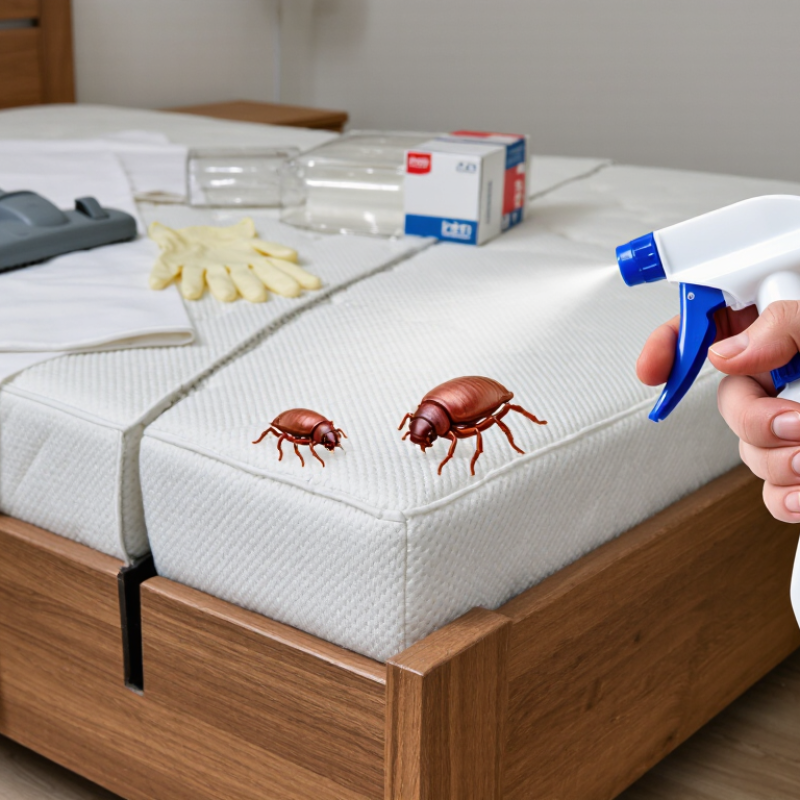
Before applying spray, remove clutter and place washable bedding in a sealed bag. Wash and dry fabrics using the hottest safe setting. Vacuum mattress seams, bed frames, skirting boards, and floor edges. Dispose of the vacuum contents outdoors. Read the entire label. Wear the listed gloves and protective clothing, and open windows when required. Keep children and pets away until the label says re-entry is safe. Never spray skin, clothing, pillows, or food surfaces unless specifically permitted. Treat cracks, joints, and hiding areas with a controlled amount. Avoid soaking mattresses or furniture. It can create breathing hazards and damage materials.
I prefer a flashlight and slow inspection over hurried spraying. Missed hiding places are a common failure. Check again after the label’s stated interval, because newly hatched bugs may appear. Do not mix pesticides or use outdoor products indoors. If bites continue, look for live insects rather than relying only on skin marks. Persistent activity may require a licensed pest professional, especially in shared housing. Keep the product container and label available for medical or pest-control advice.
What Are the Limits and Risks of Bed Bug Sprays?
Bed bug spray can kill exposed insects, but it rarely solves an infestation by itself. Many products work only when spray reaches the bug directly. Eggs are harder to penetrate, and hidden insects may remain untouched. Bed bugs often shelter inside seams, cracks, bed frames, and wall gaps. That distance limits what a surface treatment can accomplish. Results can look better before the infestation returns.
Using more spray does not mean better control. Excess liquid can stain fabrics, irritate skin, and worsen breathing problems in poorly ventilated rooms. Children, pets, and people with asthma need extra protection. Never spray mattresses, clothing, or skin unless the product label specifically permits it. Do not mix products. Mixing chemicals can create dangerous exposure without improving results. Some bed bug populations also show resistance to common insecticides. Repeated treatment may increase exposure while leaving the source untouched.
During inspections, professionals look for live bugs, shed skins, dark spotting, and fresh evidence. Bites alone cannot confirm bed bugs. A safer plan combines careful cleaning, laundering, monitoring, and targeted treatment. Follow the label exactly, including re-entry times and protective equipment. If activity continues, seek a qualified pest professional who can identify hiding places and resistance concerns. I have seen rushed spraying create false confidence. The room smelled strongly, yet insects remained behind the headboard. That outcome is easy to underestimate.






 Products
 Search