How to Choose the Best Ant Control Products?
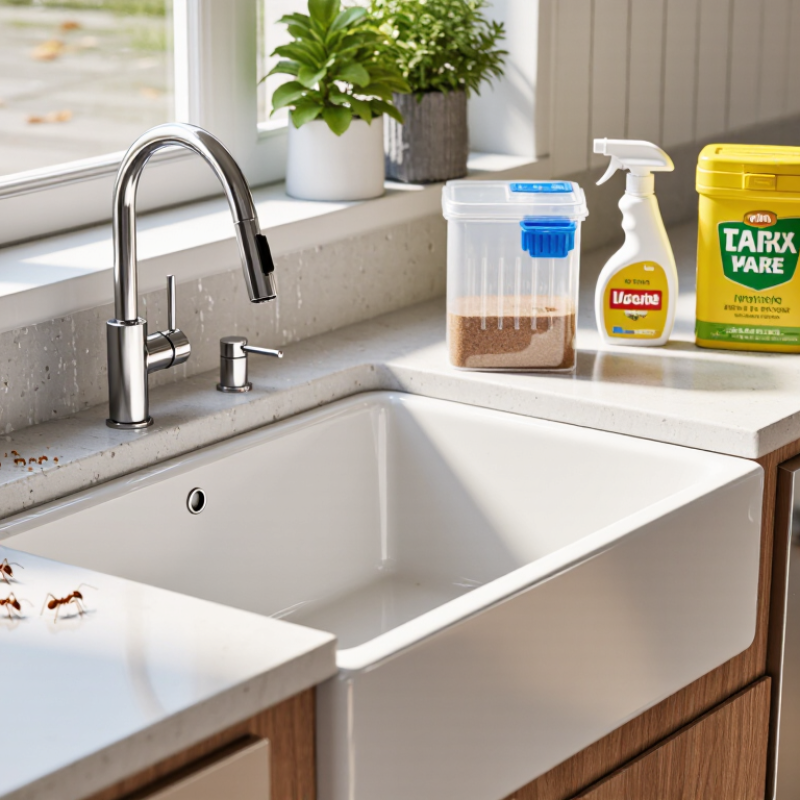
Choosing the best ant control product is rarely about finding the strongest bottle. It is about matching the product to the ant species, nesting site, and household conditions. A tiny trail beside the kitchen sink may require a different solution from ants nesting beneath patio stones. Misidentifying the species can waste time and increase repeated applications.
Reliable decisions begin with evidence. Check the active ingredient, directions, application site, and safety warnings on the product label. Baits can work well because worker ants carry food back to the colony. Sprays may provide faster visible results, but they can interrupt baiting and leave the nest untouched. This difference matters. A disappearing trail does not always mean the colony is gone.
Moisture, food crumbs, cracks, children, and pets should shape the choice. Seal entry points, clean sweet residue, and correct leaks alongside product use. Professional pest specialists often inspect these details before recommending treatment. However, no product performs perfectly in every home. Weather can reduce outdoor results, while overapplication can create unnecessary exposure and expense. That part deserves honest attention.
The best ant control plan is targeted, labeled, and proportionate. Compare proven product types, not exaggerated promises. Follow local regulations and the manufacturer’s instructions carefully. When activity continues, a licensed professional can identify hidden nests and safer treatment options. A thoughtful choice protects the home while respecting people, animals, and the surrounding environment.
Identify the Ant: Use the 700+ North American Species Benchmark
How to Choose the Best Ant Control Products?
North America has more than 700 documented ant species, and appearance alone can mislead you. A tiny black ant may be a pavement ant, odorous house ant, or another species entirely. Check body size, color, antenna shape, waist segments, and nesting location. Take a close photograph beside a coin. Record where workers travel and whether they prefer sweets, grease, or moisture.
Behavior provides valuable clues. Ants near sinks may follow water, while ants beneath paving stones often protect an outdoor nest. Some species send steady trails toward food, but others scatter when disturbed. I have misidentified ants from color alone, especially under poor lighting. That mistake can lead to the wrong control method. Identification guides, local extension services, and qualified pest professionals can improve accuracy.
Choose products only after comparing the ant’s habits with the product’s labeled purpose. Slow-acting bait may work when workers carry food back to the nest. A contact treatment may provide quick relief, but it may not affect the colony. Read the label carefully, follow application limits, and keep treatments away from children, pets, food, and water. Do not mix products. If ants return after treatment, reconsider the identification, moisture source, and entry point rather than applying more product automatically. Even experienced observers sometimes need a second inspection.
How to Choose the Best Ant Control Products?
Identify the Ant: Use the 700+ North American Species Benchmark
North America has more than 700 described ant species, so product selection should begin with identification rather than appearance alone. The chart compares approximate adult worker-length ranges for several commonly encountered pest groups. Size ranges overlap; also consider color, nesting location, trails, and feeding behavior. Slow-acting baits are generally better suited to ants that carry food back to the colony, while contact treatments are more useful for direct protection of specific areas. Always follow the product label and local regulations.
Compare Active Ingredients with EPA Registration and Toxicity Data
Choosing an ant control product starts with its active ingredient, not its packaging. Compare the ingredient with the product’s EPA registration number and approved use sites. EPA registration means the product passed a risk review for its labeled uses. It does not mean the product is harmless.
Read the label beside EPA toxicity information. Signal words offer a quick screening tool: “Caution” generally indicates lower acute toxicity than “Warning” or “Danger.” Still, that label is not a complete safety score. Boric acid products may present limited acute risk when used correctly, yet swallowed granules can harm children or pets. Pyrethroid products can work quickly, but EPA ecological assessments often identify risks to aquatic organisms. Keep them away from drains and standing water.
Look for evidence beyond advertising claims. The EPA’s Pesticide Industry Sales and Usage reports show that active-ingredient volume is tracked separately from product risk. The National Pesticide Information Center also explains how exposure depends on dose, route, and duration. A small indoor bait placement differs greatly from broad surface spraying. Check whether the formulation is a bait, gel, dust, or liquid. I once treated “low toxicity” as a complete answer. It was not. Ventilation, storage, and application accuracy still matter. The better choice is the registered product whose ingredient, toxicity data, and label directions match the specific ant problem.
Match Product Forms to Behavior: Baits, Sprays, Dusts, and Granules
Choosing the best ant control product starts with ant behavior, not shelf appearance. Baits work when workers carry food back to the nest. They suit trails near kitchens, wall gaps, and outdoor entry points. The 2023 National Pest Management Association household pest report identifies ants as one of the most frequently encountered residential pests in the United States. That frequency makes bait placement important, not optional.
Sprays provide quick contact control. Use them around cracks, thresholds, and visible entry routes. However, spraying an active trail can scatter workers and reduce bait acceptance.
Dusts fit dry voids, electrical-free wall cavities, and narrow crevices. Apply only a light layer. Heavy deposits often repel ants or remain visible.
Granules are more practical outdoors, especially along foundations, garden edges, and paving joints. Moisture changes their performance.
Match the product to the colony’s movement. Sweet-feeding ants may prefer liquid or gel baits, while protein-seeking species may respond better to solid formulations. Preferences can shift with season and colony development. A 2022 professional pest-management survey reported that integrated pest management remains widely recommended because monitoring, exclusion, and targeted treatment work together. I have seen people place bait beside a freshly sprayed trail. It fails surprisingly often.
Research from the University of California Integrated Pest Management Program also stresses sanitation and sealing entry points. Product choice matters, but inspection still decides whether control lasts.
Apply IPM: Monitor Ant Activity for 7–14 Days Before Reapplying
How to Choose the Best Ant Control Products?
Ants are common indoor invaders, but the fastest treatment is not always the best choice. The National Pest Management Association’s 2023 Bugs Without Borders survey ranked ants among the leading household pest complaints. That finding matters because visible ants may represent only a small part of the colony. Follow the trail to windows, wall gaps, plumbing areas, or damp soil outside. Record the location, time, ant numbers, and weather conditions.
Use an Integrated Pest Management approach. Apply a suitable product according to its label, then monitor activity for 7–14 days before reapplying. The University of California Statewide IPM Program advises careful observation and sanitation before repeated treatment. Wipe food residue from counters, seal dry goods, and repair dripping taps. Do not disturb a bait trail too quickly. Ants may need time to carry the material back to the nest.
Watch closely.
A sharp decline after several days suggests progress. Continued traffic may indicate a hidden nest, poor placement, or an unsuitable product. I have sometimes treated too soon, and that only made the pattern harder to read. Product performance also varies with temperature, moisture, species, and food availability. Keep a simple log, take dated photographs, and follow all label directions. If activity continues after two monitoring cycles, consult a qualified pest professional for species identification and a more precise plan.
How to Choose the Best Ant Control Products? — Apply IPM: Monitor Ant Activity for 7–14 Days Before Reapplying
Use the least disruptive option that matches the ant species, infestation level, and location. Always follow the product label.
| Product Type | Common Active Ingredient Groups | Best Use | Advantages | Limitations | 7–14 Day Monitoring and Reapplication Rule | Key Safety and IPM Notes |
|---|---|---|---|---|---|---|
| Enclosed bait stations | Boric acid or borate compounds; insect growth regulators; other slow-acting bait actives | Indoor trails, kitchens, offices, and areas where people or pets may contact loose bait | Allows foraging ants to carry food-based bait back to the colony; enclosed designs reduce exposure | May work slowly; placement must be close to active trails; bait can become unattractive when contaminated or dried | Inspect after 7–14 days. Replace only if bait is consumed, dried, contaminated, or the label permits replacement. If activity is declining, continue monitoring instead of automatically adding more. | Do not spray repellent insecticide around bait stations. Keep stations inaccessible to children and pets unless the label states otherwise. |
| Gel bait | Boric acid or borate compounds, fipronil, indoxacarb, or other labeled bait actives | Cracks, crevices, wall void access points, and localized indoor ant trails | Can be placed precisely near trails and feeding sites; useful where stations cannot fit | Can dry out or be removed during cleaning; some ants may prefer sugar-based bait while others prefer protein or grease-based bait | Check after 7–14 days. Reapply only to locations where bait has been consumed or the label specifically allows it. A lack of feeding may indicate poor placement or unsuitable bait preference. | Apply small placements rather than large exposed blobs. Keep away from food-contact surfaces and follow all label restrictions. |
| Liquid or granular bait | Food-based formulations containing labeled slow-acting insecticide actives | Outdoor trails, foundation edges, nest approaches, and landscape areas where permitted | Can treat broader outdoor foraging zones; slow action supports transfer within the colony | Rain, irrigation, heat, and competing food can reduce attractiveness or persistence; not every formulation is suitable for indoor use | Inspect treated areas after 7–14 days and reapply only when bait is consumed, weathered, or the label specifies a repeat interval. Do not increase the rate to compensate for poor placement. | Remove competing food and correct moisture or sanitation issues. Prevent runoff into drains, ponds, streams, or other water bodies. |
| Non-repellent liquid treatment | Certain labeled phenylpyrazoles, oxadiazines, neonicotinoids, or other non-repellent insecticide classes | Perimeter cracks, entry points, and localized outdoor areas when baiting alone is insufficient | Ants may cross treated areas without immediate avoidance, allowing contact and transfer within the foraging population | Requires careful application; may be restricted to specific sites; repeated applications can increase environmental exposure | Record activity before treatment, then reassess after 7–14 days. Reapply only if ants remain active and the product label permits it; investigate entry points and moisture sources first. | Do not apply to food, food-contact surfaces, waterways, or areas prohibited by the label. Avoid treating directly over active bait placements unless directed by the label. |
| Repellent contact spray | Pyrethrins or pyrethroids, including various labeled synthetic pyrethroid compounds | Immediate knockdown of visible ants or targeted crack-and-crevice treatment where permitted | Usually provides rapid visible reduction of exposed ants | Often does not eliminate the colony; repellent residues can disrupt bait feeding and may scatter ants to other areas | Do not reapply simply because a few ants are seen. Monitor for 7–14 days, identify whether activity is declining, and use a labeled bait or exclusion method when colony control is needed. | Use only as a targeted supplement. Follow ventilation, re-entry, food-surface, aquatic-life, and pet-safety instructions on the label. |
| Desiccant dust | Silica gel or other labeled desiccating dusts; some products use diatomaceous earth | Dry, protected voids and inaccessible cracks where the label allows dust application | Works physically rather than through chemical nerve toxicity; can remain effective while dry and undisturbed | Performance decreases when wet; visible piles can be dispersed and excessive dust may reduce insect contact | Inspect after 7–14 days. Reapply only when the dust is wet, removed, or disturbed and the label allows repeat treatment. Do not create airborne dust. | Use the minimum labeled amount. Avoid breathing dust and keep it away from occupied areas, food, children, and pets unless specifically permitted. |
| Physical exclusion and sanitation | No insecticide; sealing materials, screens, cleaning, drainage, and moisture management | All ant problems, especially recurring indoor trails and entry points around doors, windows, pipes, and foundations | Reduces access and food sources without pesticide exposure; supports long-term prevention | May require maintenance and may not remove an established nest by itself | Inspect conditions weekly for at least 7–14 days. Repair gaps, remove food residues, and correct leaks when observed rather than automatically applying more insecticide. | Prioritize exclusion, clean-up, and moisture reduction as the foundation of an IPM program. |
Verify Results: Follow EPA Labels and Reassess the Colony Weekly
Choosing an ant control product starts with the colony, not the shelf label. Observe trails near windows, sinks, wall gaps, and outdoor nesting areas. Baits may suit active trails because workers can carry food back to the colony. Sprays may provide quick contact control, but they can interrupt bait movement. Read the EPA label before opening any product. It explains approved locations, application rates, target pests, and required precautions.
Follow every label direction, even when the infestation looks severe. More product does not mean better control. Keep applications away from food, children, pets, and surfaces not listed on the label. Use gloves or other protective equipment when required. Never combine products. Ventilate indoor areas as directed. A small notebook can improve accuracy. Record the date, product type, location, weather, and visible ant activity.
Reassess the colony weekly. Check the same trails and nesting areas each time. Fewer ants may show progress, but hidden activity can continue. Look for fresh trails, new entry points, or undisturbed bait. If activity remains unchanged after the label’s stated period, review the application and product fit. I have seen people reapply too quickly, which wastes effort and may increase exposure. My own inspections are not perfect either. Missed cracks and changing temperatures can distort results. When uncertainty remains, consult a qualified pest professional and retain the product label for reference.
Related Posts
-
10 Best Ant Control Products for Global Buyers?
-
Top 10 Effective German Cockroach Pest Control Methods?
-
What is the Best Cockroach Pest Control Method for Your Needs?
-
Why Is Effective Cockroach Pest Control Essential for Businesses?
-
How to Effectively Control Pests for Optimal Business Operations?
-
Top 10 Cockroach Gel Products to Buy for Global Market Needs?