How to Choose Ant Pest Control Products in 2026?
Choosing an ant pest control product in 2026 requires more than picking the strongest-looking bottle. Ant species, nesting locations, weather, household habits, and product ingredients all affect the result. A gel bait may work well near kitchen trails, while an outdoor granule may suit a patio edge. The wrong choice can waste money and scatter the colony.
This guide focuses on practical, evidence-informed decisions. It considers bait stations, gels, sprays, dusts, and lower-risk options. Product labels should clearly identify the active ingredient, target pests, application areas, and safety instructions. Select products approved by your local regulatory authority, and follow every label direction. Keep treatments away from food, children, pets, drains, and untreated surfaces. Never mix products unless the label specifically allows it.
No product is perfect.
Effective control often begins with observation. Follow the ant trail at dawn or after rain. Check window frames, plumbing gaps, plant pots, and warm wall spaces. Baits can require patience because workers carry food back to the nest. Sprays may provide quick relief but can interfere with bait activity. That distinction is easy to miss.
A reliable ant pest control plan also includes prevention. Seal small cracks, repair leaks, store sweet foods securely, and remove fallen fruit outdoors. If ants return repeatedly, identification may require professional help. Even experienced users can misread a species or overlook a hidden nest. This article will help readers compare products carefully, question attractive claims, and choose a safer approach for their specific setting.
Identify the Ant Species and Assess the Infestation
How to Choose Ant Pest Control Products in 2026?
Identify the Ant Species and Assess the Infestation
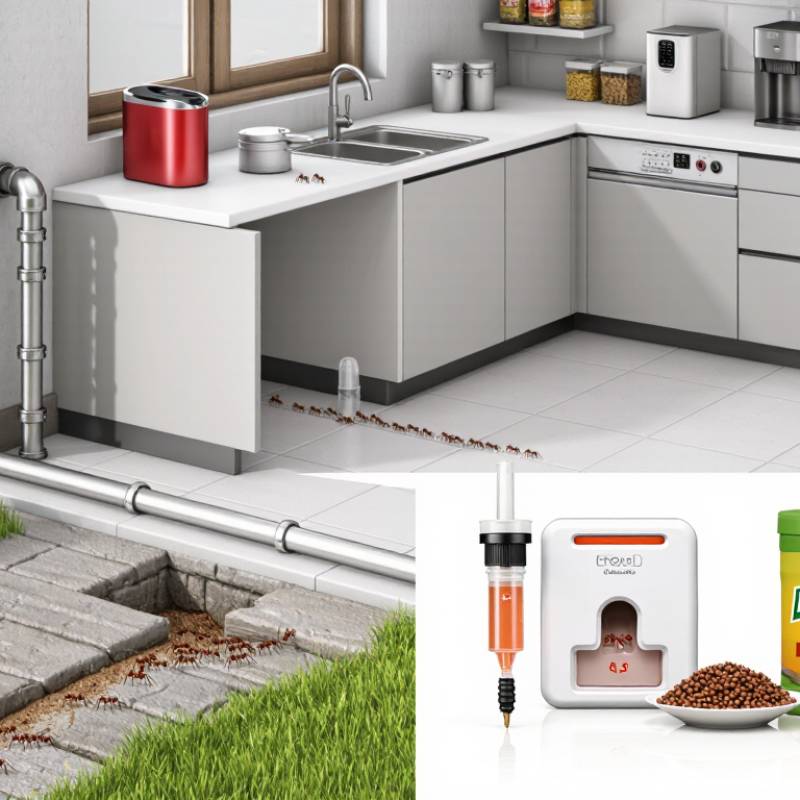
Choosing an ant product starts with identification, not the shopping cart. Ants may look similar, but their habits differ sharply. University of California Integrated Pest Management identifies odorous house ants, pavement ants, and carpenter ants as common household invaders. Carpenter ants deserve extra attention because they excavate damp wood rather than eat it.
Look closely at trails, nests, and entry points. Tiny ants around sinks may follow moisture. Coarse sawdust beneath a window could indicate carpenter ant activity. Ants appearing only after rain may be nesting outdoors. Take clear photographs beside a ruler. A single worker proves little.
The National Pest Management Association’s Bugs Without Borders survey lists ants among the most frequently reported household pests by pest professionals. That finding matters, but it does not measure every home. Count active trails during morning and evening checks. Record rooms, numbers, and food sources for three days. A few foragers need a different response from multiple indoor nests.
Do not assume every ant is a health emergency. Misidentification can waste treatment and spread colonies. I have found that rushed product choices often follow one dramatic sighting. That judgment can be wrong. When ants emerge from structural wood, or activity continues despite sanitation, consult a licensed professional and follow the product label exactly.
Understand Active Ingredients and Product Formulations
How to Choose Ant Pest Control Products in 2026?
Understand Active Ingredients and Product Formulations
Choosing ant control in 2026 requires more than reading “fast acting” on a package. Active ingredients determine how ants respond, while formulation controls where and how exposure occurs. Baits may contain slow-acting ingredients, allowing workers to carry food back to the colony. Sprays often act faster, but they can scatter foraging ants and miss hidden nests. Gel, liquid, granule, and dust products behave differently on tile, soil, wood, and damp surfaces. The label is evidence, not decoration.
Look for the ingredient name and its purpose. Boric acid compounds can work through ingestion and contact, while insect growth regulators interrupt development in immature insects. Some modern insecticides target the nervous system and require careful placement. “Natural” does not automatically mean harmless. Read permitted-use directions, ventilation requirements, re-entry periods, and first-aid information. Never mix products unless the label expressly allows it.
A practical choice starts with the ant’s trail, food preference, and nesting site. Place bait near active paths, not directly across them. Keep competing food and moisture under control. For cracks, a precise gel may reduce drift; for outdoor edges, labeled granules may fit better. Still, the decision is not always clean. A bait can dry before workers accept it, while a spray may appear successful as the colony remains. Recheck activity after several days, record changes, and adjust only according to the label and local regulations.
How to Choose Ant Pest Control Products in 2026?
Understand Active Ingredients and Product Formulations
The chart compares representative active-ingredient concentrations commonly found on ant-control product labels. Concentration alone does not indicate overall effectiveness or safety: bait acceptance, pest behavior, formulation, application site, and label directions are also important. Always check the current product label and select a formulation appropriate for indoor or outdoor use.
Match Pest Control Products to Nest Location and Infestation Severity
How to Choose Ant Pest Control Products in 2026?
Match the product to the nest, not only the visible trail. Ants ranked among the leading nuisance pests in the National Pest Management Association’s 2024 Bug Barometer. The report also links warmer, wetter conditions with stronger seasonal pest pressure. A few ants beside a sink may indicate a hidden wall void. Use a slow-acting bait there, so workers can carry it back to the colony. Avoid spraying the trail immediately. Contact sprays can kill visible ants while leaving the nest active.
Outdoor nests need a different approach. For soil mounds near foundations, choose a labeled outdoor bait or perimeter treatment. Keep applications away from drains, food, children, and pets. Read the product label carefully. The U.S. Environmental Protection Agency recommends integrated pest management, including sanitation, exclusion, monitoring, and targeted treatment. Seal cracks around pipes and wipe sweet residues from counters. One field mistake is treating every ant the same. That rarely works.
Severity should guide persistence and professional help. Occasional workers may improve after several days of bait placement. Ants appearing across rooms, winged ants indoors, or repeated trails suggest a larger colony. University extension guidance commonly advises patience because bait transfer can take days. Do not keep adding products when activity changes slowly. Photograph trails, record locations, and reassess after one week. If activity continues, consult a qualified pest professional for nest tracing and safer product selection.
Evaluate Safety, Regulations, and Environmental Impact
In 2026, choose an ant control product by reading its active ingredient and full safety label. Registration matters. In the United States, pesticide products must meet Federal Insecticide, Fungicide, and Rodenticide Act requirements. European buyers should check Biocidal Products Regulation authorization. A legal product is not automatically safe for every room.
Use enclosed bait stations where children and pets may reach treated areas. Avoid spraying food surfaces, drains, or outdoor paving before rain. Follow the label’s waiting time, ventilation advice, and disposal instructions. I still find these details easy to underestimate. Keep the original container.
Environmental impact deserves equal attention. The FAO Pesticides Use database reported about 3.70 million tonnes of active ingredients used worldwide in 2022. Ant control is only a small share, but repeated household use adds to the wider chemical burden. Select the smallest effective treatment area. Prefer targeted baits over broad surface spraying when appropriate. Check whether outdoor use could reach soil, ponds, or flowering plants. The US EPA’s Pesticide Industry Sales and Usage report estimated roughly 1.1 billion pounds of conventional pesticides used domestically in 2019, showing why reduction matters. Product claims can sound reassuring. Independent advice from a licensed pest professional is often more reliable than packaging language.
Plan Application, Monitoring, and Long-Term Prevention
Choosing ant pest control products in 2026 requires more than picking the strongest-looking formula. Start by identifying the ant’s path, nesting area, and food source. I usually watch trails for two evenings before applying anything. A small piece of cardboard can reveal hidden movement along baseboards. Choose products labeled for the exact indoor or outdoor location. Read the active ingredient, directions, re-entry instructions, and storage warnings. Baits often work better than instant sprays because workers can carry food back to the colony. Keep applications away from food, children, and pets.
Application planning should be precise. Use the smallest effective amount. Place bait stations beside active trails, not randomly across the room. Do not spray over bait, because strong odors may discourage feeding. Check stations after two or three days. A temporary increase in activity can happen. That does not always mean failure. Record the date, location, weather, and ant response. Monitoring turns guesswork into evidence. Still, I have sometimes removed a station too early and interrupted progress.
Long-term prevention depends on correcting conditions that attract ants. Seal narrow gaps around pipes, windows, and door frames. Repair dripping taps and improve drainage near walls. Store sweet foods in closed containers and wipe crumbs from hidden corners. Outdoor vegetation should not touch the building where it creates a bridge. Recheck vulnerable areas every month during warm periods. If activity continues after careful treatment, changing products repeatedly may waste time. A qualified pest professional can identify the species and review safer, site-specific options. Perfect prevention is unrealistic, but consistent inspection reduces surprises.
How to Choose Ant Pest Control Products in 2026? - Plan Application, Monitoring, and Long-Term Prevention
| Product Category | Common Active-Ingredient Examples | Best Use Case | Application Plan | Typical Visible Response | Monitoring Method | Long-Term Prevention Role |
|---|---|---|---|---|---|---|
| Slow-acting gel or liquid bait | Boric acid, borax, fipronil, indoxacarb, hydramethylnon, or imidacloprid | Active trails indoors, around food-preparation areas, and near entry points where worker ants can reach the bait | Place small amounts beside trails and suspected entry points. Keep bait available while ants are feeding; replace when consumed, contaminated, or dried out. | Feeding may increase at first; activity commonly declines over several days to a few weeks, depending on species, colony size, and bait acceptance. | Use dated inspection points, count ants at the same locations, and record bait consumption every 2–3 days initially. | Often the preferred first-line approach because foraging workers can transfer bait within the colony. Seal entry gaps after activity decreases. |
| Bait stations | Boric acid, fipronil, indoxacarb, hydramethylnon, or other registered bait formulations | Homes, offices, schools, and other locations requiring contained placement and reduced contact with the bait | Position stations along active routes, under appliances where permitted, or outside near protected entry points. Do not place where children or pets can access them unless the label allows it. | Station visitation can begin within hours; meaningful reduction may take several days or longer. | Number each station, record placement dates, inspect for feeding and damage, and replace according to the label or inspection findings. | Supports an integrated pest management program by providing controlled, measurable bait delivery with less exposed residue. |
| Granular outdoor bait | Hydramethylnon, indoxacarb, spinosad, or other locally registered ant-bait actives | Outdoor trails, nest areas, landscape edges, and perimeter zones where broadcast or spot treatment is permitted | Apply only to dry surfaces and at the label rate. Avoid watering or heavy rain immediately after application when the label warns against it. | Foraging and bait removal may be visible the same day; colony suppression generally requires repeated observation over one or more weeks. | Inspect perimeter zones weekly during peak activity and record treated areas, weather, and renewed trail locations. | Can reduce outdoor pressure before ants enter buildings, but works best when moisture, food sources, vegetation contact, and structural gaps are also managed. |
| Non-repellent liquid treatment | Fipronil, indoxacarb, chlorfenapyr, or other locally registered non-repellent insecticides | Targeted exterior foundation treatment, cracks, voids, or nest locations when permitted by the label | Use precise spot or crack-and-crevice applications rather than unnecessary broad indoor spraying. Keep people and animals away as directed by the label. | May reduce trail activity within days, but results vary with weather, application quality, species, and whether the colony is reached. | Recheck treated routes after 7–14 days and after heavy rain. Look for new trails rather than relying only on dead ants. | Useful as a targeted supplement when baiting alone is insufficient. Avoid repeated, unnecessary applications that may increase exposure or disrupt baiting. |
| Repellent contact spray or dust | Pyrethrins, bifenthrin, deltamethrin, permethrin, or other registered pyrethroid products | Limited, label-approved crack-and-crevice or exterior treatments requiring rapid contact knockdown | Apply only to listed sites and avoid spraying directly over bait placements or active trails intended for bait transfer. | Visible knockdown may occur quickly, but surface repellency can divert ants to new routes without eliminating the colony. | Inspect nearby rooms, wall edges, and exterior foundations for redirected activity over the following 1–2 weeks. | Best reserved for specific situations; prioritize sanitation, exclusion, and colony-directed baiting for sustainable control. |
| Dust for dry voids | Boric acid, silica gel, or diatomaceous earth products registered for the intended site | Dry wall voids, service penetrations, and inaccessible cracks where the label specifically permits dust use | Use the smallest effective amount with suitable application equipment. Do not create airborne dust or apply to exposed food-contact surfaces unless expressly permitted. | Contact effects may develop over hours to days; moisture can reduce performance for some dust formulations. | Check for renewed activity at nearby openings and confirm that the treated void remains dry and undisturbed. | Helps close hidden routes when combined with caulking and repair work; it should not replace moisture control or structural exclusion. |
| Monitoring tools | Sticky cards, non-toxic monitoring bait, inspection labels, flashlight, and location log | Identifying species activity, entry routes, seasonal patterns, and treatment success | Place monitors near suspected routes without blocking access to active bait. Date and number each monitoring point. | Provides trend information rather than direct colony control; useful changes may be visible after several inspection cycles. | Record ant counts, species appearance when identifiable, weather, food or moisture conditions, and the exact location. | Creates a prevention baseline and helps avoid unnecessary pesticide applications when activity is absent or declining. |
| Exclusion and sanitation measures | Caulk, door sweeps, weather stripping, leak repairs, sealed food containers, and routine cleaning | Reducing food, water, shelter, and entry opportunities after or alongside treatment | Seal cracks around pipes, windows, doors, and foundations; remove plant contact with walls; repair leaks; clean food residues and manage waste. | New trail formation may decrease gradually as access and resources are removed; results depend on building conditions and surrounding habitat. | Conduct monthly inspections and additional checks after rain, landscaping changes, plumbing repairs, or construction. | Provides the most durable prevention foundation and reduces reliance on repeated pesticide applications. |
Related Posts
-
How to Choose the Most Effective Bed Bug Treatment
-

China Top 10 Indoor Pest Control Manufacturers?
-
What is the Best Bed Bug Spray for Effective Pest Control?
-
7 Tips for Choosing the Most Effective Bed Bug Treatment?
-

How to Effectively Control Cockroaches in Your Home?
-
2026 Best Bed Bug Treatment Options for Effective Elimination?