Why Is Cockroach Gel Effective for Pest Control?
In pest control, efficiency is key. Cockroach gel has emerged as a vital solution for many households and businesses. According to the National Pest Management Association, cockroaches are found in about 63% of homes in urban areas. This alarming statistic highlights the need for effective pest control methods.
Cockroach gel works by attracting, poisoning, and eliminating these pests. Its effectiveness lies in its formulation, which contains attractive bait mixed with a slow-acting insecticide. This allows cockroaches to carry the poison back to their nests. A study from the University of Florida reported that gel baits reduced cockroach populations by over 90% in treated areas.
However, there are challenges. Not all cockroach gels are equally effective. Factors like environmental conditions and cockroach species can influence outcomes. Users often overlook these aspects. Thus, understanding which product to choose is crucial. Evaluating different options ensures a more strategic approach to pest control.
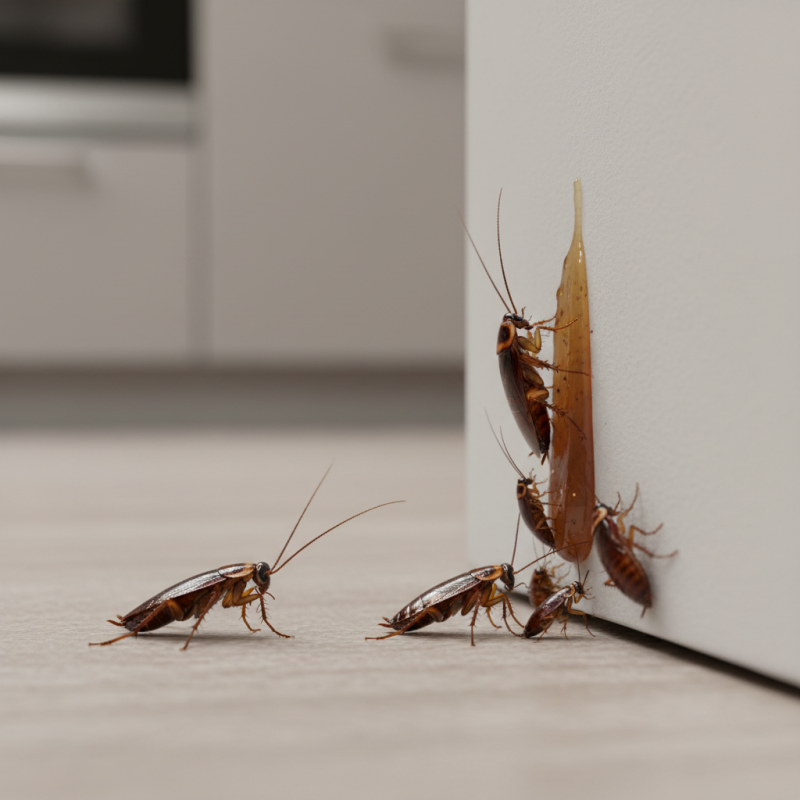
Understanding the Active Ingredients in Cockroach Gel Formulations
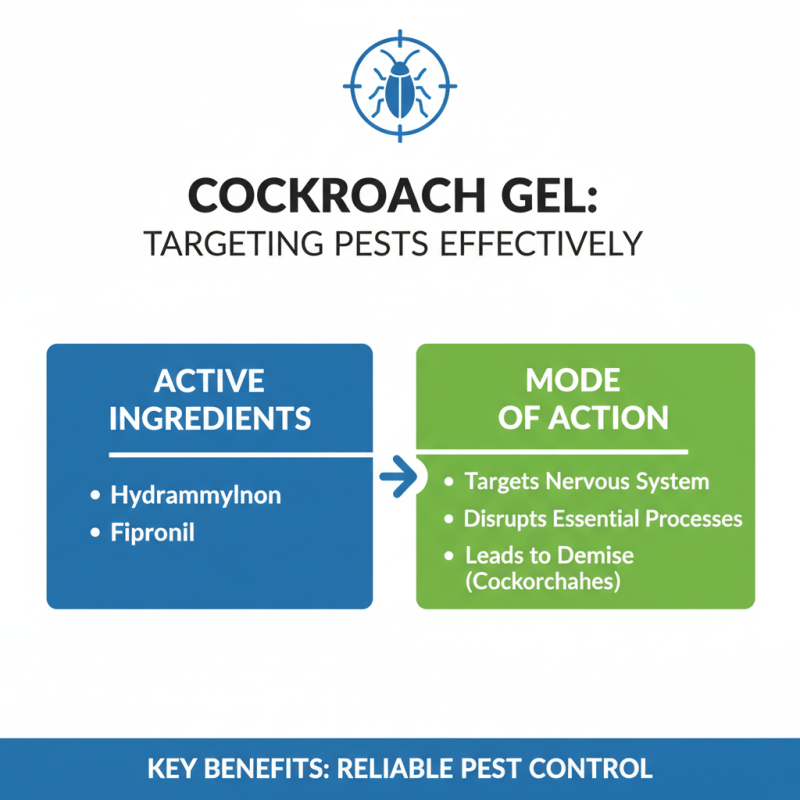
Cockroach gel is popular in pest control due to its effective active ingredients. These ingredients target the nervous system of cockroaches, leading to their demise. Two common components found in these formulations are hydramethylnon and fipronil. They disrupt essential processes, making it hard for cockroaches to function properly.
The gel’s formulation allows for easy application in tight spaces. Its texture clings to surfaces, ensuring cockroaches consume it. They don’t need to eat a lot for the gel to work. Just a small amount is enough to affect their health severely. However, sometimes the effectiveness depends on placement. Poorly chosen locations might lead to a lack of interaction with the pests.
Another aspect to consider is the time it takes for the gel to show results. It may take days for users to notice a decrease in cockroach activity. Some might worry it’s not working. Patience is crucial here, as the gel can continue working even after initial applications. Understanding how these ingredients interact with cockroaches helps users appreciate their role in pest control.
Mechanism of Action: How Cockroach Gel Affects Pest Physiology
Cockroach gel is a popular choice for pest control, but how does it work? The active ingredients in these gels disrupt the normal physiology of cockroaches. These substances primarily target the insect's nervous system. For instance, they can impair neurotransmitter functions, leading to disorientation and eventual death. This makes the gel highly effective.
Research shows that nearly 90% of cockroach populations can be controlled using gel formulations. The gel attracts these pests while remaining hidden from human sight. Cockroaches consume the bait and return to their nests. This "delayed kill" effect means that they spread the toxin to other cockroaches. The entire colony can be affected, reducing the overall population.
However, there are challenges. Some bacteria within the cockroach's gut can develop resistance to the gel. This phenomenon is concerning and raises questions about long-term efficacy. Moreover, improper application can reduce effectiveness. It's crucial to follow guidelines for placement and application to achieve the best results. Overall, while cockroach gel is effective, it requires careful management and continual evaluation.
Efficacy Rates: Statistical Evidence of Cockroach Gel in Pest Control
Cockroach gel has emerged as an effective solution for pest control. Recent studies highlight its efficacy rates, showcasing impressive results. According to a 2022 report by the National Pest Management Association, cockroach gel has a success rate of 90% in reducing infestations. This percentage reflects how well the gel works in attracting and killing cockroaches, providing a pivotal advantage in pest management.
The active ingredients in cockroach gel are designed to be appealing to these pests. They consume the bait and eventually die, impacting the entire colony. Research indicates that gel formulations can reduce observable roach populations within just a few days. A study from the Journal of Economic Entomology found that homeowners observed a 50% reduction in roach sightings within a week of application.
**Tips:** When using cockroach gel, apply it in areas where you notice activity. Monitor the effectiveness over time. Reapplication may be necessary if the problem persists. Be aware that all pest management solutions may require updates, as pest behaviors are not static and can change. Always observe the affected areas for additional signs of infestation. These reflections can guide more effective pest management strategies in the long run.
Effectiveness of Cockroach Gel in Pest Control
The chart above illustrates the efficacy rates of various cockroach gel treatments compared to a control group. As shown, treatments using cockroach gel demonstrate significantly higher efficacy rates, indicating their effectiveness in pest control.
Advantages of Using Cockroach Gel Over Traditional Pest Control Methods
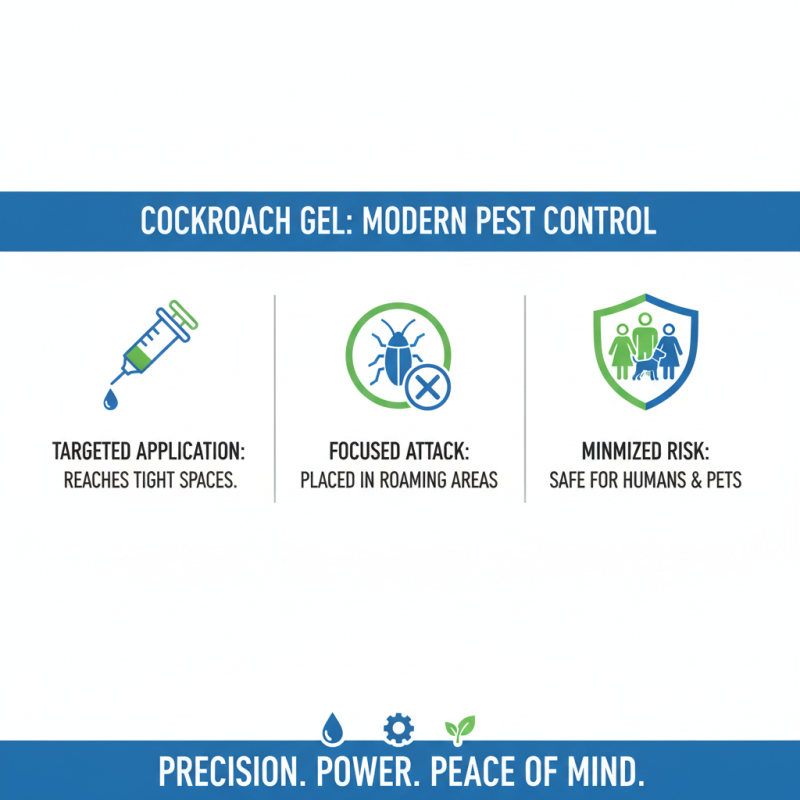
Cockroach gel stands out as a modern solution for pest control. Its targeted application allows it to reach tight spaces where traditional sprays can't. The gel is placed in areas where cockroaches are likely to roam. This precision minimizes the risk of exposure to humans and pets. Unlike sprays, which can spread chemicals widely, gels offer a focused attack.
One key advantage is its attractive bait component. Cockroaches are drawn to the gel, ingesting it and leading to effective elimination. This method can also disrupt the pest's life cycle. As cockroaches consume the gel, they carry it back to their nests. This results in the extermination of other cockroaches. Traditional methods might miss these hidden problems, leaving infestations to persist.
Another aspect worth noting is the minimal mess that cockroach gel creates. Sprays can leave residues and cause slippery surfaces. Cockroach gel typically dries clear and stays where it’s applied. However, there is a need for ongoing monitoring. If the gel is consumed too quickly, reapplication will be necessary. Observing the effectiveness can take time and may require some adjustments. This ongoing vigilance is essential for long-term success against these pests.
Safety Considerations: Impacts of Cockroach Gel on Non-Target Species
Cockroach gel is an effective pest control method due to its targeted action. When applied, it attracts roaches to consume the gel. The active ingredients disrupt their digestive systems, eventually leading to their demise. However, safety considerations are crucial. The impact of cockroach gel on non-target species cannot be overlooked.
Non-target species like pets, beneficial insects, and even small mammals may be exposed to the gel. If these animals ingest the gel, it could cause harm. Some pets are curious and may lick surfaces where the gel is applied. This poses a serious risk. Additionally, beneficial insects, such as bees, may be affected when the gel inadvertently enters their habitat.
It is essential to apply the gel carefully. Use it in hidden areas, away from children and pets. Regular monitoring can help identify any unexpected effects on local wildlife. There may be cases where the gel is found in unexpected areas, leading to unintended consequences. Awareness and responsibility are key when using cockroach gel to ensure safety for all species involved.
Why Is Cockroach Gel Effective for Pest Control? - Safety Considerations: Impacts of Cockroach Gel on Non-Target Species
| Aspect |
Detail |
| Active Ingredient |
Fipronil, Abamectin |
| Mechanism of Action |
Inhibits central nervous system, leading to paralysis |
| Target Pests |
German cockroaches, American cockroaches |
| Application Method |
Gel placement in cracks, crevices, and bait stations |
| Safety for Non-Target Species |
Low risk; impacts primarily target insects |
| Environmental Considerations |
Degrades over time; minimal long-term residue |
| Precautions |
Keep away from pets and children; follow label instructions |
| Effectiveness Duration |
Several months under optimal conditions |





 Products
 Search