
What Is China Chromium Carbide Overlay Plate Used For?

What Is China Chromium Carbide Overlay Plate Used For? The answer begins with abrasive wear. China Chromium Carbide Overlay Plate is a welded composite material designed to protect carbon steel surfaces. Its hard chromium-carbide layer faces the wear source. A tougher steel backing supports fabrication and installation.

Industry reports show why this product matters. The U.S. Geological Survey’s Mineral Commodity Summaries identifies stainless steel and alloy production as major chromium-consuming sectors. World Steel Association data also recorded approximately 1.88 billion tonnes of crude steel production worldwide in 2024. These volumes support demanding material-handling systems. Mining, cement, steel, power generation, recycling, and bulk transport often use overlay plates in chutes, hoppers, bins, crusher liners, conveyor parts, and elbows.

The principle is simple. Protect the surface first.

Professor Ian Hutchings, a leading tribology researcher, describes wear as “the progressive loss of substance from the operating surface of a body.” That definition explains the plate’s practical role: reducing material loss where rock, clinker, coal, slag, or ore repeatedly strikes and slides.

Performance is not automatic. Overlay chemistry, carbide distribution, weld quality, dilution, plate thickness, and operating temperature all influence service life. Poor installation can shorten a strong plate’s working period. This is sometimes overlooked.

A responsible selection process compares abrasion type, impact energy, operating temperature, and replacement access. Laboratory hardness data helps, but field experience matters more. China Chromium Carbide Overlay Plate can extend maintenance intervals, although it cannot solve every wear problem. That limitation deserves honest attention.
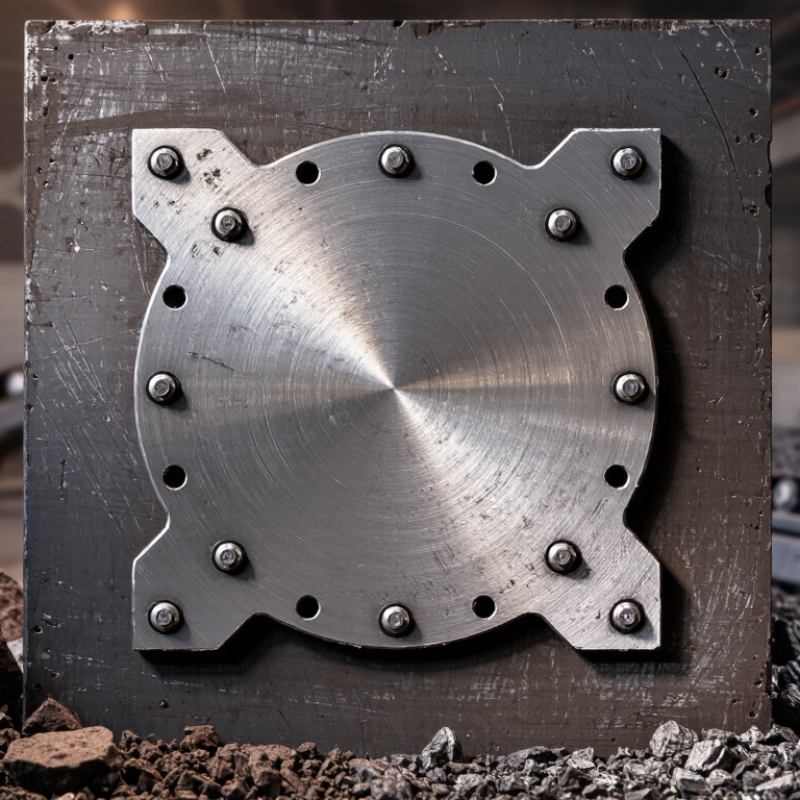
What Is China Chromium Carbide Overlay Plate Used For?

Chromium Carbide Overlay Plate: 20–40% Chromium and 55–65 HRC Hardness

Chromium carbide overlay plate is used where sliding abrasion rapidly removes ordinary steel. Its working layer commonly contains 20–40% chromium, forming hard chromium carbides inside a weld-deposited matrix. These carbides help resist stones, clinker, coal, sand, and metal particles.

The overlay usually reaches 55–65 HRC, depending on chemistry, welding conditions, and testing method. This hardness suits wear liners in mining chutes, cement mills, crushers, hoppers, and material transfer points.

A plate may protect a truck bed from sharp rock or line a conveyor skirt exposed to constant impact.

Surface cracks can appear during cooling. They often help relieve welding stress rather than indicate immediate failure.

Selection still requires practical judgment.

High hardness improves abrasion resistance, but it does not guarantee strong impact performance. A brittle overlay may perform poorly under heavy dropping loads or repeated bending.

Plate thickness, base-metal support, operating temperature, and particle size also matter.

In a cement plant, fine abrasive dust may demand a different solution from large falling ore. Cut edges and drilled holes need suitable procedures, because careless fabrication can damage the overlay.

Performance should be checked through site measurements, wear patterns, and maintenance records, not hardness alone. That evidence gives engineers a more reliable basis for choosing chromium carbide overlay plate.

How CCO Plates Resist Abrasion at Operating Temperatures up to 600°C

What Is China Chromium Carbide Overlay Plate Used For?

Chromium carbide overlay plate is used where severe abrasion quickly damages ordinary carbon steel. It combines a tough steel backing with a hard, carbide-rich wear layer. The carbides resist sliding particles, impact, and repeated material flow. Common applications include mining chutes, cement hoppers, clinker conveyors, and steel transfer systems.

At operating temperatures up to 600°C, CCO plates can protect surfaces exposed to hot ash, clinker, ore, and furnace dust. Chromium-rich carbides remain hard at elevated temperatures better than many conventional wear steels. However, temperature performance depends on carbide chemistry, plate thickness, welding quality, and thermal cycling. A plate may survive steady heat but crack after repeated heating and cooling. That detail is often underestimated.

In practical maintenance work, technicians inspect cracks, distortion, loose liners, and exposed backing steel. Plate joints should allow for expansion, especially around hot discharge points. Cutting and welding require controlled procedures because the overlay is extremely hard. Poor installation can create weak edges. CCO plates are not ideal for every impact condition; thick rubber or alloy steel may perform better under heavy shock. Engineers should review material size, impact energy, temperature peaks, and maintenance access before selecting the plate. Test sections can reveal wear patterns more honestly than catalog data.

Chromium carbide overlay plates are commonly used in chutes, hoppers, conveyor transfer points, cyclones, clinker systems, and ash-handling equipment exposed to abrasive particles. Their chromium-rich carbide layer provides high resistance to sliding and impact abrasion, while the steel backing plate supplies structural support. The values below represent typical maximum operating-temperature ranges for abrasive service conditions; actual performance depends on load, impact energy, material chemistry, plate thickness, and cooling conditions.

Mining Applications: Chutes, Hoppers, Liners, and Wear-Prone Transfer Points

What Is China Chromium Carbide Overlay Plate Used For?

Mining operations handle enormous volumes of abrasive rock every day. The USGS Mineral Commodity Summaries 2024 reported about 41 million metric tons of chromite production in 2023. This scale explains why chutes, hoppers, and transfer points suffer rapid impact and sliding wear. Chromium carbide overlay plate protects carbon steel surfaces with a hard, chromium-rich wear layer. It is commonly installed on chute walls, hopper outlets, screen surrounds, and conveyor transfer liners. The plate helps reduce shutdowns, replacement labor, and uncontrolled material buildup.

In practice, plate selection requires more than hardness. ASTM G65 abrasion testing provides useful comparative data, but field performance can differ. Impact energy, rock size, moisture, and liner angle all influence service life. A very hard surface may crack under heavy impact. A thinner plate may also fail when support spacing is poor. These details are easy to underestimate. USGS production figures show material scale, not actual liner life, so maintenance records remain essential for reliable decisions.

Tips: Inspect high-wear zones during planned stoppages. Measure plate thickness and record failure locations. Use sacrificial liners near direct impact areas, then apply overlay plate along sliding surfaces. Leave access for replacement. A simple hardness number can mislead. Engineers should compare abrasion results with real operating conditions before specifying thickness, weld pattern, and mounting methods.

Cement and Power Plants: Protecting Conveyors, Cyclones, and Fan Components

Chromium carbide overlay plate is used to reduce abrasive wear in cement and power plants. It combines a tough steel base with a hard, carbide-rich surface. The base supports the structure. The overlay resists sliding particles and repeated contact.

In cement plants, it protects conveyor chutes, transfer points, hoppers, and clinker handling sections. Limestone, clinker, and spilled material can remove ordinary steel quickly. In power plants, it helps protect coal conveyors, ash channels, cyclone bodies, and fan components. Cyclone inlets and cones face fast-moving dust. Fan housings and impellers also suffer from particle erosion. Properly selected overlay plate can extend service intervals and reduce unplanned shutdowns.

Tips: Match the plate thickness and hardness to the wear pattern. Measure material speed, particle size, and impact angle before fabrication. Check weld quality and support spacing during installation. A common mistake is choosing the hardest plate for every location. High impact or severe thermal cycling may require a tougher, less brittle solution. Inspect cracks, loose welds, and thin transition areas regularly. Real operating conditions often differ from design assumptions. That difference deserves attention.

Choosing Plate Thickness, Overlay Chemistry, and Welding Methods for Service Life

What Is China Chromium Carbide Overlay Plate Used For?

China chromium carbide overlay plate is used for severe sliding, impact, and abrasive wear. Common applications include chutes, hoppers, crusher liners, mixer blades, and conveyor transfer points. Plate thickness should match the wear pattern, not simply the equipment size. A 6 mm overlay may suit moderate sliding wear, while 10–12 mm can support heavy impact and longer replacement intervals. However, excessive thickness can increase weight, distortion, and installation difficulty.

Overlay chemistry controls service life. Typical chromium carbide layers contain about 20–35% chromium and 4–6% carbon, forming hard carbides inside a tougher metallic matrix. Technical hardfacing studies commonly report overlay hardness above 55 HRC, but hardness alone can mislead. ASTM G65 abrasion testing measures mass loss, and lower loss generally indicates better sliding-wear resistance. Field conditions still matter more than a laboratory number. Moisture, impact angle, particle size, and temperature can change results.

Welding requires restraint. Low-hydrogen electrodes or compatible flux-cored wires help reduce cracking in the base plate. Welders should normally attach the plate from the mild-steel side, using short intermittent welds and balanced sequencing. Preheating must follow the base-metal specification, especially for thick sections. AWS welding guidance and ISO 9606 qualification principles support controlled procedures and qualified operators. I would not select chemistry from a datasheet alone. Site measurements and failure photographs often reveal the real problem, though they are sometimes incomplete.

chevron-right